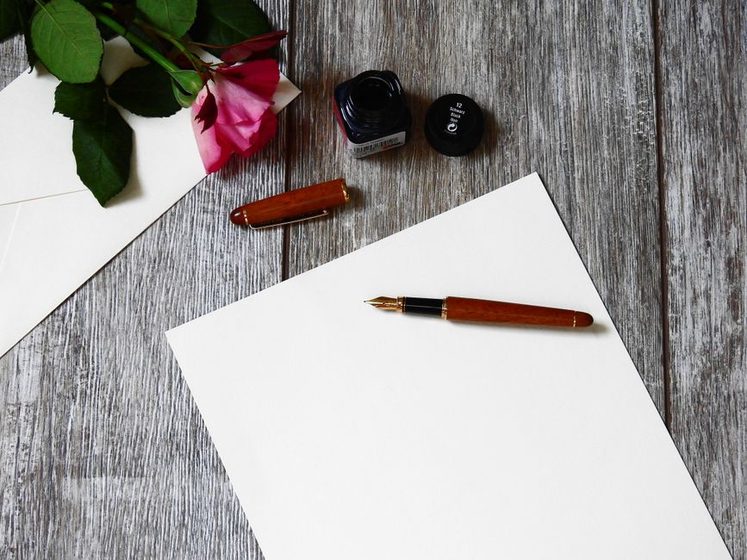
The letter had sat in a mailbox that didn't quite seal against the rain, and by the time it reached the kitchen table the flap had gone soft and the stamp had started to lift at one corner. Inside, the ink held. Not because anyone had planned for a damp Tuesday in April, but because whoever wrote it had, for reasons that may not have been fully conscious, chosen an ink that doesn't come apart when water touches it. Most people never think about this until it happens to them — a wet coat pocket, a mailbox with a gap under the lid, a glass knocked over on a desk — and by then the choice has already been made.
Three Inks, Three Behaviors
Most personal letters today are written with one of three families of ink, and each behaves differently once water gets involved. Iron gall ink, the old standard behind centuries of correspondence and record-keeping, starts out pale and darkens over hours as it reacts with the air. Dye-based fountain ink, the kind that comes in the wide range of blues, greens, and burgundies people associate with fountain pens, sits closer to the surface of the page and stays soluble — which is exactly what makes the color vivid and exactly what makes it vulnerable. Ballpoint ink is a different animal altogether: a viscous paste rolled onto the page rather than absorbed into it, closer in behavior to a thin coat of paint than to a dye.
What a Little Moisture Actually Does to a Page
Water doesn't attack ink so much as it reopens a decision the ink already made when it dried. A dye that dissolved in water to begin with will tend to dissolve again if enough of it touches the page — whether the moisture comes from a rainstorm, a spilled cup, or humidity sitting inside a mailbox overnight. Pigment particles, by contrast, don't redissolve the same way; once they're lodged between paper fibers they tend to stay put, and moisture can only carry away what was never fully bound to the page. The paper itself plays a role too. A heavier, more absorbent stock pulls ink down into its fibers where it's harder to disturb, which is one reason the question of stock weight comes up in how a sheet announces itself before anyone reads a word.
The ink doesn't have to be beautiful to be believed. It only has to still be there when the letter arrives.
Iron Gall's Old Advantage
Iron gall ink has an unusual property that most modern inks don't bother with: it keeps changing after it's written. The mixture — iron salts and tannin, historically drawn from plant galls — starts out a thin grey-blue and oxidizes as it dries, eventually settling into a near-black that has bonded, at the fiber level, to the page itself. That bond is part of why archives still hold iron gall documents that are centuries old and legible, and why some conservators treat it as one of the more durable writing inks in general use. The tradeoff is well known among people who work with it: iron gall ink is hard on steel nibs, has a narrower color range than modern dye inks, and a poorly balanced batch can eventually damage the very paper it bonded to. Writers who care about permanence more than palette have kept using it anyway, in careful, deliberate doses.
Trading Color for Certainty
Dye-based fountain ink remains the more popular choice for everyday letters, and it's easy to see why — a good dye ink can shade from pale gold to deep burgundy in a single stroke, something pigment or iron gall inks rarely manage. But some letter writers keep a second bottle on hand, something duller and more stable, for the letters that matter enough that legibility outranks color: a note meant to outlast a move, something tucked into a drawer for later, anything that might sit in an envelope through a wet week before it's opened. It isn't so much a rule as a habit a few writers pick up after losing one important page to a rained-on mailbox.
What Ballpoint Gets Right, and What It Doesn't
Ballpoint ink survives moisture better than almost anything else people write with day to day, mostly because it was never designed to dissolve in the first place. The oil-based paste sits on top of the fiber rather than soaking into it, so a wet thumb or a damp envelope rarely does more than smear the surface slightly. What ballpoint doesn't offer is the visual warmth that makes a letter feel handwritten rather than merely legible — little shading, little line variation, and a tendency to skip or blob depending on angle and pressure. It also presses a faint groove into the page that can show through thin paper, part of why some writers pair a ballpoint letter with a heavier stock and the kind of protective lining discussed in why some envelopes are lined at all.
| Ink type | When it gets damp | Longevity on the page | Often chosen for |
|---|---|---|---|
| Iron gall | Bonded pigment resists smearing once fully oxidized | Decades to centuries, well documented in archives | Letters meant to be kept |
| Dye-based fountain ink | Can redissolve and feather or run | Tends to fade and shift color over years | Everyday letters, color and shading |
| Pigment fountain ink | Particles mostly stay put once dry | Holds color well, resists fading | A middle ground between the two above |
| Ballpoint | Waxy paste rarely dissolves, may smear lightly | Stable but can fade unevenly in light | Notes written in a hurry, handling durability |
A Small Test Before You Trust an Ink
There's a simple way to find out how an ink is likely to behave before it matters: write a line on a scrap of the same paper, let it dry fully, and then touch it with a damp fingertip and press lightly.
- Let the sample dry overnight rather than the twenty minutes it takes to look dry to the eye.
- Use a damp fingertip, not a soaked one — closer to a light mailbox drizzle than a dropped glass.
- Press rather than rub, since rubbing tests something closer to rough handling than weather.
- Compare the result against a dry line of the same ink, since some faint shift is normal even for stable inks.
A line that blurs into a pale smear under that light test will likely do the same in a mailbox. A line that holds its edge probably will too.
This is a general look at how a few common inks respond to moisture, not a guide to archival or legal-document standards. Where permanence genuinely matters, a conservator or archivist will get further than a kitchen-table water test — this is meant as background reading for a curious letter writer, nothing more.
-
The Tri-Fold and Its Discontents
Why the standard business fold survives, and where it quietly fails a longer letter.
-
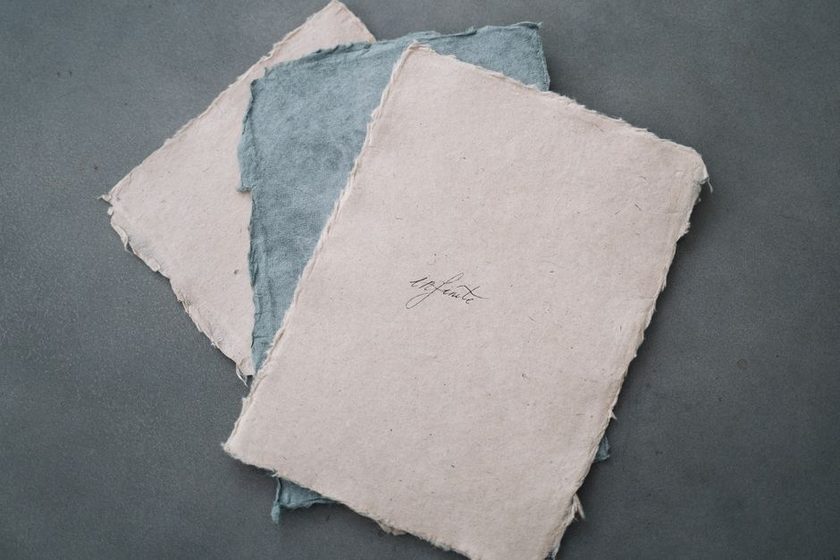
Deckle Edges and the Torn Look
The ragged border isn't damage — it's how paper used to be made, and why some mills still fake it.
-

What a Drawer of Old Letters Teaches
Reading a decade of someone's correspondence in one sitting changes how you write the next one.